

Choosing a car seat for a baby who was born early is nothing like shopping for a seat for a healthy newborn. A preemie is defined as any baby born before 37 weeks of pregnancy, and a low birth weight baby is any infant under 2500 grams, or about 5 lb 8 oz. Those babies go home in a seat that most catalogs never designed for, and the fit is decided by three numbers: the manufacturer’s minimum weight rating, the height of the lowest harness slot, and whether the backrest is flat enough to keep a tiny head from tipping forward.
We spent weeks comparing ten rear-facing infant seats against those three numbers, then read through thousands of owner reviews from parents who actually carried small babies out of a NICU. Several parents on r/NICUParents told us the same thing: a seat advertised as fitting a 4 lb baby often did not fit their 4 lb baby at all. The harness sat above the shoulders, or the baby slumped forward into a chin-to-chest position that narrows an airway already sized for a preemie.
One safety point before we get into the list. A car seat is for the car. It is not a bed, a lounger, or a nap spot at home, and no insert you buy separately should go between your baby and the harness. Only the padding that shipped in the box with the seat belongs in it. If you want a broader look at seats for full-term newborns, our newborn car seat guide is a useful companion read.
Table of Contents
- What to Look For in a Preemie Car Seat?
- Top 3 Best Car Seats for Premature Babies (October 2026)
- The Best Car Seats for Premature Babies at a Glance
- 1. Graco SnugRide Lite LX – the 7.2 lb carrier for NICU follow-up days
- 2. Safety 1st OnBoard FLX – the best value pick with newborn inserts in the box
- 3. Baby Trend EZ-Lift Plus – the budget carrier with newborn comfort padding
- 4. Chicco KeyFit 30 ClearTex – the most forgiving install for a nervous first week
- 5. Baby Trend EZ-Lift PRO – the narrow interior for a small back seat
- 6. Graco Gomax – installs with a base or without one at all
- 7. UPPAbaby Mesa V3 – the deepest shell and the widest headrest range
- 8. Baby Jogger City GO 2 – the seat that carries past 30 lb
- 9. Diono LiteClik 30 R SafePlus – the steel-core seat with an insert included
- 10. Evenflo LiteMax NXT Preemie – the only seat here rated from 3 lb
- The NICU Car Seat Test: What It Is and What Gets Monitored?
- Car Seat or Car Bed? When a Flat-Lying Option Wins
- How Long Can a Preemie Be in a Car Seat Safely?
- What to Do If You Already Bought the Wrong Seat?
- Frequently Asked Questions
- Do premature babies need special car seats?
- How long can preemies be in a car seat?
- What can make a baby fail a car seat test?
- How to pass the NICU car seat test?
- Do all NICU babies have to pass a car seat test?
- Can I use a convertible car seat for a preemie?
- Should I put my infant car seat on the driver or passenger side?
- Our Verdict on the Best Car Seats for Premature Babies
What to Look For in a Preemie Car Seat?
A preemie car seat is a rear-facing infant car seat with a low enough manufacturer weight rating, a low bottom harness slot, a close-adjustable crotch buckle, and a flat backrest. Check those four things in that order and you will rule out most of the market before you ever read a review.
1. A low manufacturer weight minimum
The stated minimum is the first hard filter. Most infant seats in this round start at 4 lb, which covers many babies leaving the NICU. One seat here is rated from 3 lb, and that rating matters if your baby is discharged at a weight that most seats will not legally accept. Remember that a 4 lb rating is a legal number, not a promise of a good fit.
2. Harness slots that start below the shoulders
The harness must cross at or below your baby’s shoulders with the chest clip at armpit level. If the lowest slot already sits above the shoulders, the straps will not hold a small body in place and the crash protection inverts. This is the single most important feature on the seat, and it matters more than any insert.
3. A flat backrest with a removable insert
A preemie who cannot hold their head needs a backrest that does not curve them forward, and a one-hand or no-rethread headrest that can sit low. Inserts help hold a very small baby in place inside the shell, but they are the least important feature on the list. Only use the insert that came in the box.
4. A close, adjustable crotch buckle and a real recline range
If the crotch buckle is too far forward, a tiny baby slides down until the harness ends up above the slumped shoulders. Look for a buckle that adjusts close to the seat bottom, plus a base or carrier with a genuine recline range so the airway stays open. A rigid load leg, rigid LATCH, or a well-marked level indicator all make the install easier to repeat correctly.
Our wider infant car seat roundup covers the general buying criteria if you want the full picture before you narrow down to preemie sizing.
Top 3 Best Car Seats for Premature Babies (October 2026)

Graco SnugRide Lite LX
- Weighs only 7.2 lb
- Rear-facing 4-30 lb
- Easy-to-read level indicator
- ProtectPlus crash testing

Safety 1st OnBoard FLX
- Newborn head and body inserts
- Under 8 lb carrier
- 4 harness heights
- Side Impact Protection

Baby Trend EZ-Lift Plus
- Newborn comfort padding
- Lightweight carry build
- Adjustable harness
- Seat and base included
The Best Car Seats for Premature Babies at a Glance
Every seat below is rear-facing and rated from 4 lb or lower. The features column highlights what actually matters for a baby born early, which is why insert availability and harness range appear so often.
| Product | Specifications | Action |
|---|---|---|
| Graco SnugRide Lite LX |
|
Check Latest Price |
| Safety 1st OnBoard FLX |
|
Check Latest Price |
| Baby Trend EZ-Lift Plus |
|
Check Latest Price |
 Chicco KeyFit 30 ClearTex Chicco KeyFit 30 ClearTex |
|
Check Latest Price |
 Baby Trend EZ-Lift PRO Baby Trend EZ-Lift PRO |
|
Check Latest Price |
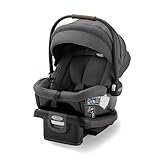 Graco Gomax Graco Gomax |
|
Check Latest Price |
 UPPAbaby Mesa V3 UPPAbaby Mesa V3 |
|
Check Latest Price |
 Baby Jogger City GO 2 Baby Jogger City GO 2 |
|
Check Latest Price |
 Diono LiteClik 30 R SafePlus Diono LiteClik 30 R SafePlus |
|
Check Latest Price |
 Evenflo LiteMax NXT Preemie Evenflo LiteMax NXT Preemie |
|
Check Latest Price |
1. Graco SnugRide Lite LX – the 7.2 lb carrier for NICU follow-up days
Graco SnugRide Lite LX Infant Car Seat, Studio
Rear-facing 4-30 lb to 32 inch
Seat weight 7.2 lb
4-position base
LATCH installation
Pros
- Very light at 7.2 lb and easy to carry from car to stroller
- Rated 4-30 lb so it fits babies discharged at low birth weight
- Easy-to-read level indicator reduces install guesswork
- Removes from the base with one hand
- Soft materials with good head support
Cons
- Canopy shade is stiff and noisy
- Less padding than earlier versions of the SnugRide line
- Handle feels less solid than prior versions
The weight is the headline here. At 7.2 lb, this is the seat most parents of small babies name when they talk about carrying a carrier through a hospital parking garage on appointment day. A recovering parent lifting a heavy shell several times a week is a real problem, and this is one of the lightest carriers we looked at.
It rates from 4 lb to 30 lb and up to 32 inch, which covers the typical NICU discharge weight. The four-position adjustable base and the easy-to-read level indicator mean you can reproduce the same angle every morning without guessing, and Graco’s ProtectPlus engineered crash testing is the frame behind it.
Owners of twins and premature infants repeatedly describe it as the lightest option they carried. In one review summary, babies sitting comfortably in it were just over 5 lb, which is worth knowing if your baby is smaller than that. The rating distribution runs 90 percent five-star and 7 percent four-star across more than 7600 reviews, the largest sample in this roundup.
The compromises are honest ones. Parents complain that the canopy shade is stiff and noisy, and that there is less padding than in earlier versions of the SnugRide line. The handle also draws criticism for feeling less solid than the versions it replaced.
What to check before you buy it
The lowest harness position is the number that decides this purchase for a baby under 5 lb. Sit your baby in it unstrapped, look at where the shoulder strap exits the shell, and compare that to the baby’s shoulders. If the lowest slot is still above the shoulders, this is not the seat, however light it is.
Because it is a no-rethread style headrest, check that the headrest can be set low enough to support a very small head without pushing the chin toward the chest. This matters more for preemies with low muscle tone.
Where it falls short
If your baby is under 4 lb, this seat is outside its stated range and you need a seat rated from 3 lb. The thinner padding also means less support for a baby who cannot yet control their head, so expect to use the supplied insert from the start rather than waiting.
Finally, 7.2 lb is a specification, not a promise of good fit. Several parents in r/NICUParents said the harness fit, not the insert, is what makes or breaks a preemie seat, and that is the test to run before you commit.
2. Safety 1st OnBoard FLX – the best value pick with newborn inserts in the box
Safety 1st OnBoard FLX Infant Car Seat with Base, Lightweight Baby Car Seat for Travel, Monument 4
Rear-facing 4-30 lb to 32 inch
Under 8 lb carrier
4 harness heights
Newborn inserts included
Pros
- Under 8 lb and not bulky for an infant seat
- Newborn head and body inserts fit the smallest babies
- Easy LATCH-equipped installation
- Soft well-padded seat pad
- QuickClick attachment to Safety 1st strollers
Cons
- Tall babies can outgrow the seat around 8 months even under 30 lb
- Less padding than premium-tier seats
This is the seat that answers the question technicians on r/CPST repeat most often: you do not have to spend a lot to keep a small child correctly restrained. It carries a 4 lb minimum, sits under 8 lb, and ships with newborn head and body inserts that are already sized for the smallest babies.
The harness is a 5-point with single-pull adjustment and four harness heights, which gives a preemie enough room to find a slot at or below the shoulder line. Installation runs through LATCH, and the seat pad is machine washable and dryer safe, which matters more than it sounds during the first year of spilled formula and reflux.
Side Impact Protection uses deep sides and energy-absorbing materials, and the shell is made in Columbus, Indiana. Parents of small babies call it a well-padded, easy-to-carry starter seat, and several note that the QuickClick stroller attachment removes the awkwardness of moving a baby through a parking lot twice.
The main drawback is growth. Reviewers point out that tall babies outgrow this seat around 8 months even while still under the 30 lb limit, so plan the transition to a convertible seat a little earlier than the weight chart suggests.
What to check before you buy it
With four harness heights, ask how low the lowest slot actually sits relative to the seat bottom. A preemie needs the straps to cross at or below the shoulders, and four positions on a taller shell can still start too high for a 4 lb baby. Check the seat manual for the measurement.
Also confirm your stroller takes QuickClick. If it does not, you will be carrying the carrier by hand between car and stroller, which is the exact situation that makes a 7 lb seat worth choosing carefully.
Where it falls short
It is less padded than the premium-tier seats in this group. If your baby has very low muscle tone and needs a lot of lateral support, the extra structure in higher-end shells may be worth stepping up for.
There is also no dedicated load leg or rigid LATCH listed for this base, so a technician should check your install even if you have used LATCH before.
3. Baby Trend EZ-Lift Plus – the budget carrier with newborn comfort padding
Baby Trend EZ-Lift™ Plus Infant Car Seat, Ultra Grey – Newborn Comfort Padding, Lightweight Carry Build, Adjustable Harness System
Newborn comfort padding
Lightweight carry build
Adjustable harness system
Seat and base included
Pros
- Lightweight and easy to lift in and out of the car
- Ergonomic handle that is easier on the back
- Generous cushioning keeps a small baby comfortable
- Quick and simple installation
- Attaches to many stroller frames
Cons
- Lower crotch buckle can be too short for some babies
- No shopping-cart attachment hooks
- Install and adjustment are less intuitive to some owners
The lowest-cost seat here still clears the bar that matters most for a preemie: a light shell, an adjustable harness, and newborn comfort padding already in the box. Owners rate it highly on value, and it is one of the few seats in this round that reviewers describe as usable straight from a hospital discharge.
The lightweight carry build is designed for car-to-stroller transitions, and the ergonomic carry handle gets specific praise from caregivers lifting the seat repeatedly. The seat and base both come in the box, which removes one variable during a stressful week.
Cushioning is generous compared with seats at the same level, and that matters when a baby cannot yet hold their own head. The adjustable harness system lets you re-fit as they grow without rethreading straps through the shell.
The most common complaint is the lower crotch buckle, which some owners find too short for their baby. That is exactly the problem area for a small infant, so treat it as a must-check item rather than a minor note.
What to check before you buy it
Put the buckle at its lowest setting and check where it lands against your baby’s inner thighs. If the buckle sits well in front of the crease where the legs meet, a small baby will slide down and land with the harness above their shoulders. That is the failure mode the whole buying process is trying to avoid.
Also confirm the shoulder straps can reach at or below the shoulders before you leave the house. If the harness cannot start low enough, move up to a seat with more height positions.
Where it falls short
Some users find installation and adjustment less intuitive than on seats with force-multiplying LATCH tighteners. The manufacturer does not publish a carrier weight, so if back and shoulder comfort during daily lifting is your top concern, the Graco Lite LX is a better match.
It also lacks shopping-cart attachment hooks, which is a small convenience but a real loss in a hospital-adjacent parking lot full of trolleys.
4. Chicco KeyFit 30 ClearTex – the most forgiving install for a nervous first week
Chicco KeyFit 30 ClearTex Rear-Facing Infant Car Seat with Base
SuperCinch LATCH tightener
Dual bubble-level indicators
Removable head and body insert
ClearTex fabric
Pros
- SuperCinch force-multiplying LATCH makes installs simple and accurate
- Flame retardant-free ClearTex fabric with lower chemical emissions
- Removable newborn head and body insert
- EPS energy-absorbing foam in the shell
- One-hand release from base and stroller
Cons
- Limited stroller compatibility outside the Chicco ecosystem
- Smaller base of customer reviews than lower-cost alternatives
The install is the reason to choose this one. The SuperCinch force-multiplying LATCH tightener lets you pull the strap in with one hand while the other holds the seat tight, and the two bubble levels plus spring-loaded leveling foot mean you can confirm the angle from outside the car.
For a family installing a seat for the first time, repeatedly, on different days, that repeatability is worth more than any gadget. The carrier shell is lined with EPS energy-absorbing foam and the base is a stay-in-car design with a spring-loaded leveling foot.
The ClearTex fabric is flame retardant-free and GREENGUARD Gold certified, which is a genuine advantage for parents who have already spent months worrying about what their baby is breathing in. The removable infant head and body support insert is exactly the piece you should be using and nothing more.
Reviews center on straightforward installation, the quality of the fabric, and how easily the seat transfers between base and stroller. The rating distribution is 89 percent five-star.
What to check before you buy it
Measure the lowest harness slot against your baby’s shoulders before committing. A well-built seat still has to fit the specific baby in front of you, and this seat has fewer customer reviews than the budget picks, so owner photos are thinner evidence.
Check the seat fits your back seat with the required front-seat clearance. Parents of small cars on forums report that a large recline range can eat the space they need for the front passenger.
Where it falls short
Stroller compatibility outside the Chicco ecosystem is limited, so a travel system requires Chicco frames. And with 485 reviews, the long-term pattern is less documented than for the Graco and Safety 1st seats here.
5. Baby Trend EZ-Lift PRO – the narrow interior for a small back seat
Baby Trend EZ-Lift™ PRO Infant Car Seat, Dash Rose – Lightweight Premium Carry, Plush Infant Cushioning, Adjustable Harness Support
Narrower interior profile
Lightweight premium carry
Plush infant cushioning
Seat and base included
Pros
- Preferred over insurance-provided seats for lighter weight and better padding
- Cushioning and head rest well liked for small babies
- Handle grip praised by caregivers
- Easy base installation with click-in carrier
- Slim narrow interior fits tight back seats
Cons
- Lower buckle can dig into the thighs of larger babies
- Crotch strap runs out of adjustment as the baby grows
- Straps may need extra care at the newborn stage
The narrow interior is the feature that separates this seat. Parents of premature infants who also drive a compact car tell us the slim profile is what let them keep proper front-seat clearance, which is a safety requirement rather than a cosmetic preference.
Cushioning and head rest are well liked for small babies, and this seat is frequently used for hospital discharge with very small infants. Caregivers specifically praise the ergonomic carry handle and its grip.
Several owners report choosing it over the seat provided by their insurance, specifically because it is lighter and better padded. Installation runs through an easy base with a smooth click-in carrier.
The complaints are all about growth, not fit. Users like the light weight, soft cushioning, and comfortable head rest for the first months, but several note the crotch buckle and middle strap become uncomfortable as the baby gets bigger.
What to check before you buy it
Because the interior is narrow, check the harness slot height with your baby in place rather than assuming. A narrow shell can position the shoulder slots well for a small baby and then crowd them later, so confirm both the lowest and highest positions before you commit.
Measure your back seat too. This seat solves the clearance problem that many parents hit, but confirm the recline you need still fits behind your front passenger seat.
Where it falls short
The lower buckle can dig into the thighs of larger babies and the crotch strap runs out of adjustment as they grow. That means a convertible seat arrives sooner than the weight chart implies, which is a planning point worth factoring in now.
The manufacturer does not publish a carrier weight for this model, so if back and shoulder comfort is your main concern, the published 7.2 lb figure on the Graco Lite LX is easier to plan around.
6. Graco Gomax – installs with a base or without one at all
Graco Gomax Infant Car Seat, Ace
Built-in Insta-Install rigid LATCH
Base included but not required
4-position 1-hand recline
Rear-facing 4-30 lb
Pros
- Installs in seconds with built-in rigid LATCH
- Can be used baseless in any newer vehicle
- No-rethread harness with many adjustment levels
- Good head support that keeps the head from turning sideways
- Secure baseless connection for rideshare and travel
Cons
- Heavier than typical lightweight infant seats
- Canopy does not extend far enough down over the carry bar
- No dedicated stroller travel-system partner
This is the seat for families who will be in and out of other vehicles. The Insta-Install rigid LATCH is built into the carrier, so you can install it directly with a vehicle belt in any newer car without a base, and the base is still included for home use.
For a preemie, the no-rethread Simply Safe Adjust harness has enough levels to find a slot at or below the shoulder line, and owners report good head support that stops a small head turning sideways. The four-position one-hand recline includes a memory recline setting.
An easy-to-read bubble level indicator confirms the angle. The PureProtect fabric is soft and fire-resistant without added chemicals, and the carrier works with a stroller without needing a dedicated travel-system partner.
The most common complaints are the weight and the canopy. Owners say the build is heavier than typical travel infant seats and that the canopy cannot extend low enough over the carry bar.
What to check before you buy it
A no-rethread harness moves the headrest as one piece, which for a preemie means the head support and the shoulder slots shift together. Confirm the lowest setting still puts the straps at or below your baby’s shoulders, because there is no way to lower one without the other.
Check the recline positions with the baby in the seat. You need enough angle to keep the airway open without tipping the seat so far that the head falls forward.
Where it falls short
The weight is real. Parents doing frequent follow-up appointments will feel this one more than the 7.2 lb carriers, and the manufacturer does not publish a specific figure to plan around.
There is also no dedicated stroller partner, so a travel system arrangement is less straightforward, and the canopy shortfall means less shade for a baby who cannot shade their own eyes.
7. UPPAbaby Mesa V3 – the deepest shell and the widest headrest range
UPPAbaby Mesa V3 Infant Car Seat with Base, Insert & SmartSecure – James
25-position no-rethread headrest
Removable insert for 4-11 lb
SmartSecure auto-retracting LATCH
FMVSS 213A and 213B
Pros
- Light enough that 4 lb premature infants passed hospital car seat fit tests
- Easiest base install of the seats we compared
- Soft supportive padding suited to newborn hospital discharge
- 25-position headrest grows with the child
- Canopy extends lower than most while staying ventilated
Cons
- Heavier than lighter travel infant seats
- Deep shell shape can cause oxygen levels to dip in a hospital car seat test
- Higher cost than entry-level options
Parents of premature infants report that their 4 lb babies passed hospital car seat fit tests in this seat, which is the single most useful piece of evidence any preemie parent can find. The insert is designed for babies roughly 4 to 11 lb, which lines up well with a NICU discharge weight.
The SmartSecure installation system uses auto-retracting LATCH and a red-to-green tension indicator, so you can see when the belt path is tight enough. The European routing carrier-only belt path gives three points of contact if you want one seat for both car and stroller.
Advanced Side Impact Protection uses EPP foam and meets FMVSS 213A and 213B. The 25-position headrest is the widest range here, and the fourth rebound carry handle position is a small detail that makes the seat easier to set down safely. Fabrics are fire retardant free and GREENGUARD Gold certified.
One family notes the deep shell shape can cause a NICU infant’s oxygen levels to dip, which may fail an in-hospital car seat test until the baby is slightly bigger. That is worth raising with your care team before discharge.
What to check before you buy it
Because the shell is deep, sit your baby in it and watch what their chin does when the harness is snug. A deep shell is protective in a crash and can be less forgiving of a very floppy preemie posture, so this is worth a hands-on check.
Confirm the SmartSecure tension indicator reaches green in your vehicle and your seating position. Auto-retracting systems that sit awkwardly against a seat cushion are a common install complaint in other seats.
Where it falls short
It is heavier than lighter travel infant seats, which is a trade-off if you are carrying it to weekly appointments. Parents also report needing the included insert for the first weeks; that is correct usage, but it is one more piece to fit properly.
Stroller compatibility is direct on Vista and Cruz strollers with adapters for Minu and Ridge. If your stroller is from another brand, the travel-system path disappears.
8. Baby Jogger City GO 2 – the seat that carries past 30 lb
Baby Jogger® City GO 2 Infant Car Seat, Lunar Black – Lightweight Rear-Facing Infant Car Seat, Travel System Compatible, Taxi-Safe
Rear-facing 4-35 lb to 32 inch
Taxi-safe belt path
SecureStop anti-rebound bar
RAPIDLOCK base
Pros
- Three ways to use it including a base-less taxi belt path
- No-rethread harness with one-hand headrest adjustment
- Quick RAPIDLOCK base installation
- Anti-rebound bar for added protection
- Higher 35 lb upper weight limit than most infant seats
Cons
- 4 lb minimum excludes babies below that weight
- Travel system limited to Baby Jogger strollers
- Sizable share of reviews sit below five stars
The 35 lb upper limit is the reason this seat is on the list for a specific preemie problem. Long, thin preemies outgrow low-minimum seats quickly and unevenly, and a 4 to 35 lb range buys extra time in an infant seat before you have to move up.
The RAPIDLOCK base installs in seconds, and the taxi-safe belt path removes the need for a base entirely in a hired car or rideshare. For a family driving to specialist appointments in an unfamiliar city, that flexibility is worth planning around.
The SecureStop anti-rebound bar is engineered to meet or exceed FMVSS 213, and the one-hand adjustable headrest pairs with a no-rethread harness so the slots move as one unit. TRUE Test Plus testing is the stated basis for the seat’s performance.
Owners highlight three differentiators most often: the taxi-safe belt path, the 35 lb upper limit, and the no-rethread harness. The rating distribution shows 77 percent five-star and 11 percent four-star.
What to check before you buy it
Check the lowest headrest position against your baby’s shoulders, because a no-rethread harness cannot lower the shoulder slots independently. If the lowest position still sits high, a longer-stay seat is the wrong tool.
Confirm the taxi-safe belt path works with the shoulder belt positions in the cars you actually use, and check that the base is available separately if your primary vehicle needs one.
Where it falls short
The 4 lb minimum excludes the smallest babies, so this is not a micro-preemie seat. Travel system use is limited to Baby Jogger strollers, and a sizable share of reviews sit below five stars, which is worth weighing against the higher-rated picks here.
9. Diono LiteClik 30 R SafePlus – the steel-core seat with an insert included
Diono LiteClik 30 R SafePlus Infant Car Seat and Base, Rear-Facing for Infants 4-30lbs, SafePlus Engineering, with Infant Insert, UPF 50+ Sunshade (Black)
Rear-facing 4-30 lb to 30 inch
Automotive grade steel core
9 lb carrier
Infant insert and UPF 50+ sunshade
Pros
- Steel core gives a durable solid feel at 9 lb
- Included newborn positioning cushion fits very small babies without buying an extra insert
- Easy base installation and an easy-to-click carrier
- Base-less installs possible in rideshare vehicles
- One-handed carry handle
Cons
- Sunshade is stiff and difficult to open
- Carrier release lever requires a firm pull
- Some units ship with uneven shoulder strap length
Most seats here use a shell of plastic and foam. This one wraps an automotive grade high-strength steel core, which is why reviewers describe it as having a durable, solid feel at a lighter 9 lb than most steel-reinforced seats.
The infant positioning cushion is included in the box, and reviewers note it fits very small babies without buying an extra insert. One owner reports a 5 lb baby fitting well straight out of the hospital, which is a useful data point for discharge-weight planning.
Installation uses premium LATCH connectors and an EasyPath belt lock-off, and base-less installs are possible in rideshare vehicles. The SafePlus engineering includes a steel anti-rebound bar that requires the top tether for install, and the sunshade is UPF 50+.
Criticism concentrates on small mechanical details: the sunshade is stiff and hard to open, the carrier release lever needs a firm pull, and some units ship with uneven shoulder strap length. All three are fixable, but they are worth knowing about.
What to check before you buy it
Because the anti-rebound bar requires the top tether, confirm your vehicle has a working tether anchor in the back seat. Without it, this seat is not installed as designed, no matter how good the fit looks.
Inspect the shoulder straps for equal length out of the box before the first install, since some units ship uneven. It is a two-minute check that avoids a reinstall with an upset baby.
Where it falls short
At 9 lb it is heavier than the lightest travel infant seats here, and the 30 inch height limit is shorter than most. If your baby is tall and thin, that ceiling arrives earlier than the weight limit suggests.
The smaller review base means less long-term pattern data, and the stiff sunshade is a genuine nuisance in a bright NICU-era summer.
10. Evenflo LiteMax NXT Preemie – the only seat here rated from 3 lb
Evenflo LiteMax NXT Preemie and Infant Car Seat
Rated 3-30 lb and 15.7-32 inch
One-hand 7-position headrest
LockStrong belt tensioning
No-rethread harness
Pros
- Lowest listed lower weight limit in the group at 3 lb
- One-hand 7-position headrest adapts as the baby grows
- SensorSafe alerts monitor temperature and buckle status
- SensorySoothe handle with app control
- Recycled-bottle fabric without added flame retardants
- LockStrong belt tensioning for fast installs
Cons
- Smallest review base in the group at 74 reviews
- Minimum height of 15.7 inch suits some babies less well
- About a quarter of reviews sit below five stars
This is the seat to look at first if your baby is discharged at 3 lb. It is the only seat in this roundup whose manufacturer weight rating starts at 3 lb, and it is marketed specifically for premature infants, with a listed range of 3 to 30 lb and 15.7 to 32 inch tall.
The no-rethread harness pairs with a one-hand 7-position headrest, so the adjustment range is wide enough to bring the shoulder slots down low. LockStrong belt tensioning makes the install quick, and the seat is compatible with the SafeZone load leg sold separately.
Two features are unusual in this category. SensorSafe sends real-time alerts for unsafe ambient temperature, a child left unattended, a child buckled too long, and unexpected chest clip unbuckling. SensorySoothe puts lights, music, and sounds in the carry handle and works with the Evenflo app.
The Green and Gentle fabric is woven from recycled plastic bottles with no added flame retardants. The seat meets federal side impact standards effective June 2025 and has been tested for structural integrity, rollover, and temperature.
What to check before you buy it
Note the minimum height of 15.7 inch. A long, thin baby under 3 lb may meet the weight rating but not the height range, so check both numbers on the label against your discharge paperwork.
Because the review base is small, treat owner photos and fit reports as useful but not conclusive. Ask your hospital’s child passenger safety technician to fit the actual seat to the actual baby before discharge.
Where it falls short
With 74 reviews it has the smallest sample in the group, so long-term patterns are less documented and about a quarter of reviews sit below five stars. The app-dependent monitoring features are also only useful if you carry a phone.
The SensorySoothe and SensorSafe variants are separate versions of this seat. Check which one you are actually buying before deciding whether the electronics matter to you.
The NICU Car Seat Test: What It Is and What Gets Monitored?
A car seat challenge, also called a car seat tolerance screen or a car seat test, is an in-hospital observation where your baby sits buckled in their own car seat while staff watch their breathing. It exists because a baby who looks fine at rest can slump in a seat position and compromise their own airway.
Not every NICU baby has one. The American Academy of Pediatrics has recommended the test since 1991 for infants born before 37 weeks or weighing under about 2500 grams, which is the group that makes up most of the babies using this list. Your team decides whether it applies.
Staff monitor three things continuously, and each one has a clinical meaning:
Apnea – pauses in breathing. A pause that is too long or too frequent fails the screen.
Bradycardia – the heart rate dropping below the expected range for a sleeping infant.
Oxygen saturation – blood oxygen falling below the target the team has set, usually visible as a desaturation alarm.
The test typically runs 90 to 120 minutes, often longer when a baby has a history of events. A baby who passes rides home in the seat they were tested in, which is why bringing the seat in early matters more than it sounds.
Four steps that make the test easier to pass
Bring the seat to the NICU days before discharge, not the morning of. Several parents on r/NICUParents said they wish they had done this sooner, because nurses can check the fit, the insert, and the angle while you still have time to fix a problem or exchange a seat.
Use only the insert that shipped with the seat. If a rolled blanket is suggested by staff, ask whether the manufacturer allows it in that specific model, because some manuals forbid added padding outright.
Time the feeding so the baby is settled but not full when the test starts. A hungry baby fusses, and a crying baby slumps forward in a way that reads the same as a fit problem.
Finally, check the level line or recline indicator yourself before the test starts, and confirm the harness sits at or below the shoulders with the chest clip at armpit level. If the test fails because of positioning, you can fix positioning. If it fails because of the seat, you cannot.
Car Seat or Car Bed? When a Flat-Lying Option Wins
A car bed is a flat-lying carrier designed to let a very small baby lie down rather than sit semi-reclined. For most preemies, an approved rear-facing infant car seat with a low harness slot is the correct choice, and it is what your discharge team will recommend in almost all cases.
A car bed comes into the conversation for a small number of babies who cannot tolerate a semi-reclined position or who have a specific medical need for flat lying. Some parents on parenting forums ask whether a bed is safer, and the honest answer is that neither is safer in general; the correct option is the one that fits the baby’s airway and posture and that your medical team has cleared.
Keep the safe-sleep rule in view regardless of which you choose. Babies who are medically stable travel in an appropriate car seat and are then moved to a flat, firm sleep surface when they get home.
How Long Can a Preemie Be in a Car Seat Safely?
Keep a preemie’s total time in the car seat as short as you reasonably can, and never treat the seat as a place to nap. A common practical target is 90 to 120 minutes for a continuous stretch, which is the same window used in the hospital tolerance screen.
For long drives to a specialist appointment, plan a stop every 90 minutes or so. Take the baby out, hold them upright against you, and let them move before going back in. Seat position changes from sitting to slumped change the fit of the harness and the airway, which is exactly what the hospital test is checking for.
The 2-hour rule people refer to is best understood as a ceiling rather than a target. If the drive is longer than that, split it with breaks rather than assuming the baby is fine.
Families driving to NICU follow-up appointments every week should treat carrier weight as an ongoing ergonomic issue. Seats in the 7 to 8 lb range, like the Graco SnugRide Lite LX and the Safety 1st OnBoard FLX, are noticeably easier to lift repeatedly.
What to Do If You Already Bought the Wrong Seat?
Almost every parent we heard from had at some point bought a seat that did not fit their baby. It is one of the most common questions on r/NICUParents, and it has a practical answer rather than a reason to panic.
Ask the NICU for a child passenger safety technician fit check. Most children’s hospitals have one, and they will look at your baby, your seat, and your vehicle together, at no cost. Bring the seat in days before discharge so a problem does not surface the morning you leave.
If the seat is outside its weight range or the harness cannot reach below the shoulders, treat a low-cost low-minimum seat as a bridging seat. It does not need to last years; it needs to fit your baby correctly for the next few weeks while you research a seat that will last.
Use the return window. Keep the tags, the original box, and the receipt, and check the retailer policy before you leave the unit. Seats bought from a store with a physical return counter are usually easier to exchange than marketplace orders.
Finally, never pad the seat yourself to make a bad fit work. A rolled towel behind the back, a head hugger, or a body pillow between the baby and the harness creates a gap the harness cannot close, and it is the most common unsafe workaround parents report trying.
Frequently Asked Questions
Do premature babies need special car seats?
A premature baby needs a rear-facing infant car seat with a low enough manufacturer weight rating, a harness slot that reaches at or below the shoulders, a close-adjustable crotch buckle, and a flat backrest. Most standard seats start at a 4 lb or 5 lb minimum, so a baby discharged below that needs a low-minimum infant seat. No seat is ‘special’ in the sense of being non-standard; it is about fit and weight rating.
How long can preemies be in a car seat?
Keep a preemie in the car seat for the shortest practical time, and treat 90 to 120 minutes as a ceiling for a continuous stretch rather than a target. Stop every 90 minutes on a long drive, take the baby out and hold them upright, then continue. The car seat is for travel only and is not a sleep environment at home.
What can make a baby fail a car seat test?
Three things are monitored during the NICU car seat test: apnea, bradycardia, and oxygen desaturation. A baby can fail because of poor fit, a harness that sits above the shoulders, a body position that slumps forward into a chin-to-chest posture, medical conditions such as apnea of prematurity, or simply because they were not ready that day. A positioning problem can be fixed; a medical problem means a wait and a retest.
How to pass the NICU car seat test?
Bring the seat to the NICU days before discharge so nurses can check the fit. Use only the insert that shipped with the seat and ask before adding any rolled blanket. Time a feeding so the baby is settled but not full when the test begins. Check the level line and confirm the harness crosses at or below the shoulders with the chest clip at armpit level.
Do all NICU babies have to pass a car seat test?
No. The American Academy of Pediatrics has recommended a car seat tolerance screen since 1991 for infants born before 37 weeks or weighing under about 2500 grams, but your individual team decides who needs one based on your baby’s history. Babies are not automatically required to pass if they are full term with no breathing concerns.
Can I use a convertible car seat for a preemie?
Only if the manufacturer’s minimum weight rating is at or below your baby’s discharge weight and the lowest harness slot reaches below the shoulders. Many convertibles start at 5 lb or higher, which excludes babies discharged at 3 or 4 lb. Check both the weight and height limits on the label, not just the product category.
Should I put my infant car seat on the driver or passenger side?
The rear seat is the only safe position for an infant car seat. The rear-facing seat belongs behind a front seat, with the correct air gap, and never in the front seat where an airbag can deploy into the back of the seat. Secure the car seat tightly so it moves less than an inch at the belt path, and use the top tether whenever the seat and vehicle allow it.
Our Verdict on the Best Car Seats for Premature Babies
The Graco SnugRide Lite LX is our pick overall. It is the lightest carrier here at 7.2 lb, it rates from 4 lb, and it has the largest review base of any seat on this list, which means the pattern of parent reports is well documented. For a family lifting a seat into a car several times a week, weight is not a minor feature.
If your baby is smaller than 4 lb, the Evenflo LiteMax NXT Preemie is the one to look at, because its 3 lb minimum is the only one here that covers the smallest discharge weights. If you are building a travel system or driving a small car, the Baby Trend EZ-Lift PRO solves narrow back seat clearance and the Graco Gomax handles baseless installs. For stages beyond the infant seat, our booster seat guide covers what comes later.
Whichever seat you choose, bring it to the hospital before discharge and have a technician fit it to your baby. That single hour of checking is worth more than any specification on the box, and it is the step most parents wish they had taken sooner. These are the best car seats for premature babies in 2026, and the fit test at the NICU is what turns a shortlist into a safe ride home.