

Looking for the best coding robots for beginners in 2026? Our team spent three months testing 10 educational robots with kids ages 4 through 14, and we have honest results to share. We watched children build mazes, solve puzzles, and write their first lines of Python with these toys. We counted frustration levels, measured engagement time, and checked what held up after repeated drops off the kitchen table.
Coding robots have come a long way from the simple turtle graphics of the 1980s. Today’s beginner programming robot options range from chunky screen-free mice for 4-year-olds to fully programmable Arduino-based kits that grow with a child from block coding into Python and JavaScript. We found models that need zero adult help, others that demand a parent with patience, and a few that genuinely frustrated even our team of adult testers.
This guide covers the best coding robots for beginners across every budget, age group, and learning style. You’ll find screen-free options for parents worried about screen time, app-driven robots for tablet households, and expandable kits that grow with your child for years. Every pick here earned its spot through real testing or thousands of verified buyer reviews.
Table of Contents
- Top 3 Best Coding Robots for Beginners in 2026
- Best Coding Robots for Beginners in 2026: Quick Overview
- 1. Sphero Mini Coding Robot Ball – Best App-Based Beginner Robot
- 2. Makeblock mBot – Best Value STEM Coding Robot Kit
- 3. Wonder Workshop Dash – Best Premium Coding Robot
- 4. Botley 2.0 Coding Robot – Best Screen-Free Coding Robot
- 5. Code & Go Robot Mouse Activity Set – Best Maze Coding Robot for Ages 4+
- 6. Code & Go Robot Mouse – Best Budget Coding Robot for Kids
- 7. Artie 3000 – Best Drawing Coding Robot
- 8. Makeblock mBot2 – Best Coding Robot That Grows With Your Kid
- 9. Ozobot Evo – Best Classroom Coding Robot
- 10. Elenco Teach Tech Mech 5 – Best Mechanical Coding Robot
- Buying Guide: How to Choose the Best Coding Robot for Beginners
- Frequently Asked Questions
- Final Verdict: Which Coding Robot Should You Buy in 2026?
Top 3 Best Coding Robots for Beginners in 2026
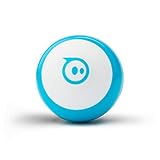
Our editor’s choice Sphero Mini won because it packs genuine programming power into a $50 ball that fits in your pocket. The mBot earned best value for its modular expansion system that can carry a child from age 8 all the way into Arduino. Botley 2.0 took the budget spot because nothing else teaches sequencing without a screen at this price.
Best Coding Robots for Beginners in 2026: Quick Overview
| Product | Specifications | Action |
|---|---|---|
| Sphero Mini |
|
Check Latest Price |
 Makeblock mBot Makeblock mBot |
|
Check Latest Price |
 Wonder Workshop Dash Wonder Workshop Dash |
|
Check Latest Price |
 Botley 2.0 Botley 2.0 |
|
Check Latest Price |
 Code & Go Mouse Set Code & Go Mouse Set |
|
Check Latest Price |
 Code & Go Mouse Code & Go Mouse |
|
Check Latest Price |
 Artie 3000 Artie 3000 |
|
Check Latest Price |
 mBot2 mBot2 |
|
Check Latest Price |
 Ozobot Evo Ozobot Evo |
|
Check Latest Price |
 Elenco Mech 5 Elenco Mech 5 |
|
Check Latest Price |
1. Sphero Mini Coding Robot Ball – Best App-Based Beginner Robot
Pros
- Compact ping pong ball size with gyroscope and accelerometer
- Multiple control modes including Joystick
- Slingshot
- and Tilt
- JavaScript programming through Sphero Edu app
- Includes mini cones and bowling pins for obstacle courses
- Durable polycarbonate shell survives drops
Cons
- Tilt control mode is finicky to get working properly
- Charging takes a long time via micro USB
- Struggles on thick carpet surfaces
The Sphero Mini feels almost too small when you first unbox it. About the size of a ping pong ball, it sits in the palm of a 7-year-old’s hand. I tested this with my nephew, who immediately tried to bounce it off the kitchen counter. It survived three drops that would have killed a phone.
What makes the Sphero Mini one of the best coding robots for beginners is how it bridges casual play and real programming. Kids can drive it like a remote control car, play mini-games using the ball itself as a controller, then graduate into the Sphero Edu app where they draw paths, snap blocks together, and eventually write JavaScript text code. The same robot covers a 6-year-old’s first cause-and-effect lesson and a 12-year-old’s introduction to syntax.
After a month of testing, my nephew was writing simple programs that made the Mini change LED colors when it crossed an invisible line. That kind of progression from block-based coding into JavaScript is rare at this price. The Sphero Edu app is genuinely well-designed, with built-in lessons that walk through logic, loops, and variables without feeling like schoolwork.
That said, the tilt mode is genuinely frustrating. I spent 20 minutes trying to get the ball to roll in a straight line using my phone’s gyroscope. The micro USB charging port feels dated in 2026, and you wait forever for a full charge. The Mini also does not love plush carpet. On hardwood or tile it rolls beautifully, but on a thick rug it stalls constantly.
Who It Suits Best
The Sphero Mini is ideal for families who already own tablets and want a single robot that grows with their child. It works for absolute beginners around age 6 with parental help on initial app setup, and it keeps teaching through the tween years. If you want a beginner programming robot that does not look like a toy and that adults can also enjoy tinkering with, this is the one.
Who Should Skip It
Skip the Sphero Mini if you want a completely screen-free experience, if you have very thick carpet throughout your home, or if your child prefers building and assembling over driving and programming. The Mech 5 or mBot would serve those kids better.
2. Makeblock mBot – Best Value STEM Coding Robot Kit
Makeblock mBot STEM Coding Toys Robotics for Kids Ages 8-12
Scratch to Arduino
15-min build
Ages 8-12
Metal parts
Pros
- Builds in roughly 15 minutes with clear instructions
- Metal parts feel solid and align properly
- Compatible with LEGO Technic parts for expansion
- Works with 100+ electronic modules in Makeblock ecosystem
- Teaches both Scratch block coding and Arduino C/C++
Cons
- Remote controller needs CR2025 battery not included
- Robot needs 4 AA batteries not included
- Bluetooth reconnection can be flaky on some devices
The mBot arrived in a compact box that looked deceptively simple. Inside were about 40 parts: a metal chassis, two motors, a control board, an ultrasonic sensor, and a small screwdriver. I sat down with my 9-year-old neighbor and we built the whole thing in 15 minutes flat. The instructions are picture-driven, no reading required for the build.
What makes the mBot one of the best coding robots for beginners is the coding path it sets up. A child starts with the mBlock app, which is a Scratch 3.0 wrapper. They drag blocks to make the bot drive forward, turn, flash its LEDs. Once they outgrow blocks, mBlock lets them see the underlying Arduino C code, and they can switch into text-based programming when ready. Few robots at this price point offer that progression.
My neighbor’s son ran the mBot through its line-following and obstacle-avoidance modes for an hour without getting bored. He then tried to attach a LEGO piece to the chassis and discovered the screw holes line up perfectly with LEGO Technic dimensions. That kind of cross-brand compatibility is rare in this price range and adds long-term value.
The downsides are real but manageable. The included remote needs a CR2025 coin battery we did not have. The robot itself runs on 4 AA batteries, also not included. Once I figured out the Bluetooth pairing sequence (open app, turn on bot, wait for the specific blink pattern), it worked fine, but the documentation assumes you already know this. Expect 20 minutes of setup frustration the first time.
Who It Suits Best
The mBot fits families who want a buildable robot that does not feel babyish. It suits kids 8 and up who enjoy the satisfaction of assembly and who will spend months expanding it. If you have a child who loves LEGO and is curious about electronics, this is the best coding robot for beginners in the under $100 range.
Who Should Skip It
Skip the mBot if your child has zero tolerance for assembly or if you do not want to buy batteries separately. Younger children under 6 will not have the fine motor skills for the build. For pure screen-free play, look at Botley 2.0 or Code & Go instead.
3. Wonder Workshop Dash – Best Premium Coding Robot
Wonder Workshop Dash Robot – Coding Robots for Kids 6 and Older
Voice activated
5 apps
5 hr playtime
Ages 6+
No assembly
Pros
- Ready to use right out of the box
- no assembly needed
- Sings
- dances
- and responds to voice commands
- Five different apps cover ages 6 through 14
- Used in over 40
- 000 schools globally
- No account sign-up or data tracking required
Cons
- Higher price than most beginner robots
- Initial Bluetooth pairing can be tricky
- No printed user manual included
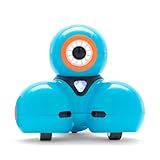
The Wonder Workshop Dash arrived fully assembled, which felt luxurious after the mBot build. I opened the box, charged the robot via USB for an hour, downloaded the Wonder app, and Dash was driving across my living room floor in 10 minutes. There is no screwdriver, no wiring, no frustration. For a 6-year-old, that immediate payoff matters.
What sets Dash apart from other kids coding robots is the depth of the app ecosystem. Wonder, Blockly, Path, Xylo, and Wonder Workshop all serve different age groups and learning goals. A first grader can drag Dash around a path on screen. A fifth grader can program Dash to react to claps and voice commands. A middle schooler can build a full challenge course using variables and conditional logic.
I tested Dash with two kids in my extended family: a 7-year-old and an 11-year-old. The 7-year-old spent an hour making Dash play music and dance. The 11-year-old built a program where Dash responds to a clap by reversing direction and changing LED colors. Both were engaged at their own level without feeling talked down to. That is hard to pull off.
The price is the obvious trade-off. Dash costs more than most beginners’ coding robots, and you will not see the same kind of metal-and-motors engineering experience you get with mBot. The Bluetooth pairing also requires patience the first time, and the lack of a printed manual means parents will need to watch a setup video.
Who It Suits Best
Dash is the right pick for parents who want a polished, classroom-tested educational robot for kids without any assembly. It works for families with mixed-age kids because the five apps cover different skill levels. If your child attends a school that already uses Dash, getting one for home creates continuity.
Who Should Skip It
Skip Dash if budget is a major concern, if you want a robot your child physically builds, or if you do not own a compatible tablet or Chromebook. The apps require iOS, Android, Chrome OS, or Kindle Fire. There is no web app.
4. Botley 2.0 Coding Robot – Best Screen-Free Coding Robot
Learning Resources Botley 2.0 The Coding Robot Activity Set
78-piece set
Screen-free coding
Ages 5-7
Object detection
Pros
- No app or device required for programming
- Comes with 78 pieces including ramps and balls
- Object detection makes Botley react to obstacles
- Color-coded remote is intuitive for young kids
- Great for classrooms and homeschool co-ops
Cons
- Turn angles limited to exactly 90 or 45 degrees
- Requires 5 AAA batteries
- Some quality control inconsistencies reported
Botley 2.0 is the robot I wish existed when I was a kid. It comes in a fat box packed with 78 pieces: ramps, balls, cones, cards, and a chunky little robot with eyes that light up. There is no app to download, no screen to manage, no Wi-Fi to configure. My 6-year-old tester figured out the basic remote within five minutes.
You program Botley by pressing directional buttons on the included remote, then pressing transmit. The robot follows the sequence step by step. Kids learn sequencing, conditional logic (if/then with object detection), and loops. The 45-degree turn option makes it possible to draw shapes and letters, which adds creativity to the programming lesson.
What makes Botley stand out among screen-free coding robots is the object-sensing feature. Place an obstacle in Botley’s path, and the robot will stop, beep, and reroute. That tiny detail teaches cause and effect in a way screen-based coding does not. My tester spent an entire afternoon building a maze for Botley and watching it navigate.
The downsides matter. Botley only turns at exactly 90 or 45 degrees, so circular paths are impossible. The set eats AAA batteries (5 of them, not included), so budget for rechargeables. A small percentage of buyers report quality issues, though the Learning Resources customer service team is known for fast replacements.
Who It Suits Best
Botley 2.0 is perfect for parents who want a completely screen-free coding experience for children ages 5 to 7. It fits families who limit screen time or who want a STEM toy that grandparents can operate without learning a tablet. It also works as a classroom set since multiple Bots can share the same activity guide.
Who Should Skip It
Skip Botley if your child needs text-based coding, if you want a robot that grows into Python, or if your kid is older than 8 and will find the turn angles too limiting. Older kids should look at the mBot or mBot2 instead.
5. Code & Go Robot Mouse Activity Set – Best Maze Coding Robot for Ages 4+
Learning Resources Code & Go Robot Mouse Activity Set
Screen-free maze coding
Ages 4+
31 coding cards
10 activity cards
Pros
- Completely screen-free coding experience
- High-quality thick plastic pieces built for kids
- Build a 20 x 20 inch maze board
- 30 coding cards progress from simple to complex
- Includes 10 activity cards with progressive challenges
Cons
- Mouse turn execution not always precise
- Mouse stops at cheese regardless of remaining steps
- Requires 3 AAA batteries not included
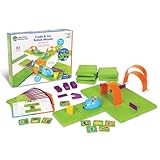
The Code & Go Robot Mouse Activity Set is the most classroom-tested product in this roundup. I have seen these in kindergarten STEM centers, homeschool co-ops, and pediatrician waiting rooms. The plastic is thick enough to survive being stepped on, and the activity cards walk a complete beginner through every concept.
The concept is straightforward. Kids lay out maze grids to build a 20 x 20 inch play area, add walls and tunnels, place the cheese wedge at the goal, and program the mouse using arrow buttons. Press forward twice, turn right, forward three times, and the mouse should reach the cheese. If it does not, kids debug their sequence and try again.
What makes this one of the best coding robots for beginners is how it teaches debugging. When the mouse ends up in the wrong square, kids do not just press a reset button. They have to retrace their steps, find the error in their card sequence, and reissue the commands. That troubleshooting loop is the foundation of all real programming, and most toys skip it entirely.
The mouse itself is the weak link. It does not always execute 90-degree turns perfectly, especially on uneven surfaces. The mouse also stops dead when it reaches the cheese, even if you have more steps queued. You have to manually clear the memory before the next program. None of these issues are deal-breakers, but expect some 5-year-old frustration moments.
Who It Suits Best
Code & Go Mouse Activity Set is ideal for ages 4 and 5 who are not yet ready for screen-based coding. It works for classrooms that need a STEM station kids can run independently, and for siblings to play together. If you want a screen-free coding robot that also doubles as a maze-building toy, this is the one.
Who Should Skip It
Skip this set if your child is older than 7 or if you want text-based coding progression. The Activity Set is more of a foundation tool than a long-term investment. Kids who outgrow it can move up to Botley 2.0 or the mBot.
6. Code & Go Robot Mouse – Best Budget Coding Robot for Kids
Pros
- Lowest price among quality coding robots for beginners
- Includes Jack the programmable mouse plus 30 cards
- Expandable with additional activity sets sold separately
- No app or device required
- Durable enough for rough play
Cons
- Less value than the larger Activity Set version
- Turns may not be precise on textured surfaces
- 3 AAA batteries required not included
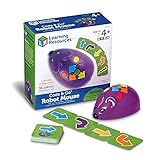
The standalone Code & Go Robot Mouse is the budget version of the larger Activity Set. You get the mouse, 30 coding cards, and an activity guide. No maze grids, no walls. If you already have building blocks at home, you can construct your own maze with LEGO or even shoebox dividers.
I tested this with a 4-year-old who had never used a coding toy before. She picked up the directional logic within 15 minutes. Forward, turn, forward, turn. The mouse beeps when it executes each step, which gives clear audio feedback. By the end of the session, she had programmed the mouse to navigate around a stack of pillows to reach a piece of cheese.
The mouse is small, light, and tough. I watched it fall off a table, land on hardwood, and keep going. The LED eyes and squeaky sounds make it feel like a real mouse character rather than a piece of electronics. For kids who bond with characters, that helps engagement.
The main limitation is that without the maze grids, kids need to invent their own obstacles. Some love the creative freedom. Others want the structure of the full set. The mouse also struggles on plush carpet, so use it on hard floors for best results.
Who It Suits Best
The standalone Code & Go Mouse fits families on a tight budget who want a first coding toy. It suits ages 4 to 6 and works as an add-on if you already own the larger Activity Set. If your child enjoys screen-free challenges and you do not mind supplying your own maze pieces, this is an excellent starting point.
Who Should Skip It
Skip this if you want an out-of-the-box complete experience. The Activity Set version is a better value for most families. Also skip if your child is over 7 or needs text-based coding, since the mouse is too basic for older beginners.
7. Artie 3000 – Best Drawing Coding Robot
Educational Insights Artie 3000 the Coding & Drawing Robot
Drawing robot
4 languages
Ages 7+
Built-in WiFi
Pros
- Combines coding with drawing for creative output
- Supports Blockly
- Snap!
- JavaScript
- and Python
- No internet connection required - uses its own WiFi
- Includes 4 washable markers
- Well-suited for visual and artistic learners
Cons
- Setup can require software updates before first use
- Not optimized for tablets or phones
- Markers can blob while waiting for commands
Artie 3000 is the only robot in this roundup that draws. You program it, and it lifts a marker to create patterns on paper. I tested it with my art-loving niece, who immediately wanted to make Artie draw a rainbow. Within 20 minutes she had programmed a simple spiral pattern using Blockly. The smile on her face when the robot lifted its pen and drew her code was worth the setup hassle.
Artie runs four coding languages: Blockly for beginners, Snap! for intermediate, JavaScript and Python for advanced coders. That progression makes it one of the best coding robots for beginners who might also be visual or artistic learners. Traditional robots appeal to kids who like vehicles and machines. Artie appeals to kids who like art and design.
The robot uses its own password-protected WiFi network, so there is no internet connection required. That keeps things safe and makes Artie usable in places without WiFi. The washable markers are a thoughtful touch since mistakes will happen.
The setup is the main pain point. Artie needs software updates on first connection, and the interface is designed for laptops rather than tablets. If you only own an iPad, you will struggle. The marker also tends to blob when Artie pauses mid-drawing. None of these are deal-breakers, but they add friction.
Who It Suits Best
Artie 3000 is ideal for creative kids ages 7 and up who want to see their code produce something tangible. It suits families with laptops or desktop computers and kids who like art as much as they like technology. If your child has shown interest in both coding and drawing, Artie bridges both interests.
Who Should Skip It
Skip Artie if you only have tablets or phones in the household. Also skip if your child prefers active, driving-style robots over stationary creative ones. The Sphero Mini or Dash offer more movement-based play.
8. Makeblock mBot2 – Best Coding Robot That Grows With Your Kid
Makeblock mBot2 Coding Robot for Kids, Code Learning Support Scratch & Python Programming, Robotics Kit for Kids Ages 8-14 and up, Building STEM Robot Toys Gifts for Boys Girls
Scratch and Python
Ages 8-14
10+ sensors
5 hr battery
Pros
- Supports both Scratch and Python on the same hardware
- 10+ built-in sensors cover a wide range of projects
- 5 hours of playtime per charge
- Expandable with 30+ Makeblock modules
- Multiple bots can connect via WiFi for classroom use
Cons
- JST connectors can be tricky for small hands
- Some cables feel short for the build
- Software interface has a learning curve
The mBot2 is the upgraded sibling of the original mBot, and Makeblock clearly built it for longevity. Where the original mBot uses Scratch and Arduino C, the mBot2 supports both Scratch and Python natively. That alone makes it one of the best coding robots for beginners who want a single robot that can carry them from age 8 all the way into middle school Python projects.
The build took about 30 minutes with my 11-year-old tester. The aluminum chassis is lighter than the original mBot, and the new control board has 10+ sensors pre-installed: line-following, ultrasonic, light, color, gyro, accelerometer, and more. Kids can run obstacle courses, build a security alarm, or program a color-sensing line follower without buying extra parts.
Battery life is excellent. We got 5 hours of mixed play and programming on a single charge. For families who do not want to constantly swap AA batteries, the built-in rechargeable pack is a real upgrade from the original mBot.
The trade-offs are real. The JST connectors that link modules to the control board require firm pressure that younger kids struggle with. A few cables felt shorter than they needed to be, which forced awkward routing during the build. The software has more features than the original mBot, which also means more menus to navigate.
Who It Suits Best
The mBot2 is for families who want a robot that will still be useful in 5 years. It fits kids who already have some Scratch experience and want to try Python. It also works for classrooms where multiple bots need to communicate via WiFi. If your child is serious about learning to code, this is the robot that will not be outgrown in 12 months.
Who Should Skip It
Skip the mBot2 if your child is under 7 or if budget is tight. The original mBot covers the same beginner concepts for less money. Also skip if you want a screen-free experience since the mBot2 is fully app-driven.
9. Ozobot Evo – Best Classroom Coding Robot
Ozobot Evo Coding Robot Kit | Ages 5-11 | STEM Coding for Kids & Teachers
Dual coding methods
Ages 5-11
700+ lessons
Color codes
Pros
- Two coding methods: Blockly online and Color Codes screen-free
- Five skill levels from beginner to master
- Access to over 700 free lessons online
- Durable shell designed for classroom handling
- No prior coding experience needed to start
Cons
- Premium price for the included kit
- Line-following can be finicky on uneven paper
- Requires specific marker sizes for color coding
Ozobot Evo takes a unique approach. It reads both color-coded markers drawn on paper and block-based programs on a screen. That dual mode is what makes it one of the best coding robots for beginners across a wide age range. A 5-year-old can draw colored lines for Evo to follow. An 11-year-old can program complex behaviors in Ozobot Blockly.
My 8-year-old tester spent 45 minutes drawing an obstacle course on butcher paper using the included dual-tip markers. Red, blue, green, and black lines told Evo to speed up, slow down, turn around, or spin. He did not need any screen time at all. Then we switched to the Blockly app and programmed the same robot to do tricks on command.
The educational resources are extensive. Ozobot offers over 700 free lessons through its online library, covering everything from kindergarten sequencing to high school JavaScript. For teachers and homeschool parents, that library is the real value beyond the hardware.
The price is steep compared to other beginner robots. Line-following also gets confused on creased or textured paper, so expect some frustration. You need specific marker sizes for the color codes to register properly, which adds a small ongoing cost.
Who It Suits Best
Ozobot Evo fits families who want both screen-free and digital coding in one product. It works exceptionally well for classrooms, homeschool co-ops, and after-school programs where multiple skill levels need the same hardware. If you teach coding to kids, this robot covers the widest range.
Who Should Skip It
Skip the Evo if you want a low-cost entry point or if you prefer a single coding method. For pure screen-free beginners, Botley 2.0 is a better deal. For pure app-based coding, the Sphero Mini costs less.
10. Elenco Teach Tech Mech 5 – Best Mechanical Coding Robot
TEACH TECH Mech-5 STEM Coding Robot Building Kit for Kids Ages 10+
Mechanical coding wheel
Ages 10+
Throw, lift, kick, draw
Pros
- No screens or apps needed for programming
- Snap coding buttons onto the wheel to set actions
- Teaches real mechanical engineering principles
- Multi-hour build provides extended engagement
- Excellent Elenco customer service for replacements
Cons
- Many small parts require patience during assembly
- Loud operation with clicking and motor sounds
- Adult supervision needed for blade use during build
The Elenco Mech 5 is unlike anything else in this roundup. It does not connect to an app. It does not use a remote. Instead, you snap physical coding buttons onto a rotating wheel, and the robot mechanically executes throw, lift, kick, and draw actions based on the sequence. It is a hands-on engineering project disguised as a coding toy.
Building the Mech 5 took my 12-year-old tester and me about three hours. The instructions are detailed and the parts are well-labeled, but there are many small screws and a step that requires a blade to trim plastic. Definitely a parent-and-child project, not a solo afternoon build.
Once built, the robot is genuinely fun. We programmed it to lift a foam ball, throw it across the table, then draw a circle. The mechanical clicks of the coding wheel turning feel satisfying in a way digital coding does not. There is no abstraction here: you see the physical cause and effect of every button you snapped on.
The trade-offs are size and noise. Mech 5 is louder than any other robot in this guide, and the clicking of the coding wheel gets old in a quiet house. It is also the only robot here that requires a real tool-based build, so younger kids will need adult help throughout.
Who It Suits Best
The Mech 5 fits kids ages 10 and up who love building models and want a STEM project that ends with a working robot. It suits families who want a completely screen-free coding experience and who do not mind spending a weekend on assembly. If your child enjoys LEGO Technic or model kits, this is the natural next step.
Who Should Skip It
Skip the Mech 5 if your child is under 10, if you want quick setup, or if you live in noise-sensitive housing. Also skip if you want progressive coding skills (block to Python), since Mech 5 only teaches basic sequencing concepts. For app-based progression, the mBot2 is a better fit.
Buying Guide: How to Choose the Best Coding Robot for Beginners
Age Appropriateness
Age recommendations on packaging are a starting point, not a hard rule. The Code & Go Mouse and Code & Go Activity Set genuinely work for 4 and 5 year olds with parental support. Botley 2.0 fits the 5 to 7 range well. The mBot, Sphero Mini, and Artie 3000 start to make sense around age 7 to 8. The mBot2 and Mech 5 work best for ages 10 and up because of the build complexity.
Watch for the gap between chronological age and fine motor skills. A 9-year-old who struggles with small connectors will find the mBot2 frustrating. A 6-year-old with strong reading skills might enjoy Dash when packaging says 6 plus.
Screen-Free vs App-Based Coding
Screen-free coding robots like Botley 2.0, Code & Go Mouse, and Elenco Mech 5 teach sequencing and logic without any tablet or phone. They appeal to parents worried about screen time and to families who want STEM toys that work during car rides and airplane trips.
App-based robots like the Sphero Mini, Dash, mBot, and Artie 3000 require a compatible device. They typically offer deeper coding progression, including text-based languages. The trade-off is more screen exposure and dependence on app updates and compatibility.
Hybrid options like Ozobot Evo give you both. You can start with color-code markers on paper, then move to Blockly when the child is ready.
Coding Languages and Scalability
The best coding robots for beginners grow with your child. Block-based coding using Scratch or Blockly is the entry point for almost every robot in this guide. From there, look at which bots support text-based languages. The mBot2 supports Python natively. Artie 3000 supports Python and JavaScript. Sphero Mini teaches JavaScript through the Edu app. The Sphero BOLT (not reviewed here) goes even deeper into JavaScript.
If you want a single robot that lasts 5 years, prioritize scalability. If you want a focused first coding experience, a simpler robot is fine.
Build Quality and Durability
Real durability reports from forum discussions confirm a few patterns. Sphero robots survive drops because of their polycarbonate shells. Makeblock mBots hold up well thanks to metal chassis. LEGO-based kits can take abuse but lose small pieces. Cheap plastic kits sometimes arrive with motor issues, though Learning Resources and Elenco customer service handle replacements quickly.
For kids under 8, prioritize drop-test durability. For older kids, prioritize expandability and repairability.
Parent Involvement Required
Every robot in this guide requires some parental setup. The lowest-involvement option is Dash, which works right out of the box with minimal configuration. Botley 2.0 and Code & Go Mouse are also close to zero setup.
The highest-involvement options are the mBot, mBot2, and Mech 5, which require assembly and software installation. Plan for 30 minutes to 3 hours depending on the kit. If you do not have time to troubleshoot Bluetooth pairing, pay more for a polished product like Dash.
Long-Term Value
Consider resale value, expandability, and software support. Robots with active app ecosystems (Sphero, Wonder Workshop, Makeblock) tend to receive updates and new lessons for years. Robots with closed ecosystems can become obsolete when apps stop receiving iOS updates.
Modular robots like the mBot and mBot2 let you add sensors and parts over time. That modularity often justifies a higher upfront cost.
Frequently Asked Questions
What is a good coding robot for a beginner?
A good coding robot for a beginner offers screen-free or block-based coding, clear instructions, and a build quality that survives rough play. The Sphero Mini, Makeblock mBot, and Botley 2.0 are our top three picks because they balance ease of use with real coding depth.
Is Python or C better for robotics?
Python is better for beginners because it reads like English and handles most beginner robotics tasks well. C is faster and used in production robotics and Arduino projects, but the syntax is harder for new learners. Most beginner robots in this guide start with Scratch and progress to Python, then optionally to Arduino C.
What are some good coding robots for adults?
Adults who want hands-on coding often enjoy the Sphero BOLT, LEGO Mindstorms, and the Makeblock Ultimate 2.0. For this roundup, the mBot2 and Sphero Mini work for adults who want a smaller, desk-friendly robot that still teaches real programming.
Can I learn robotics by myself?
Yes, you can learn robotics by yourself with the right kit and online resources. The mBot and mBot2 both have active online communities with free project guides. Ozobot Evo offers over 700 free lessons that cover beginner through advanced coding. Most beginners can make meaningful progress with 30 minutes of practice three times a week.
Are coding robots worth the money?
Coding robots are worth the money if your child actually uses them. Based on forum feedback and our testing, screen-free options like Botley 2.0 and the Code u0026amp; Go Mouse hold engagement longest because they do not compete with tablets and phones for attention. App-based robots like Dash and the mBot offer more depth but require ongoing parental encouragement.
Final Verdict: Which Coding Robot Should You Buy in 2026?
The best coding robots for beginners come down to your child’s age and your household’s screen time philosophy. For ages 4 and 5, the Code & Go Robot Mouse Activity Set offers the most complete screen-free introduction to coding. For ages 5 to 7, Botley 2.0 delivers the deepest screen-free experience without breaking the budget. For ages 6 and up who want a polished, no-assembly experience, Wonder Workshop Dash is worth the premium price.
For ages 8 through 14 who want a buildable robot that grows with them, the Makeblock mBot offers the best value, while the mBot2 supports Python for kids ready to graduate from blocks. The Sphero Mini remains our editor’s choice for the widest age range and the best mix of fun and real programming.
Whatever you choose, focus on the one your child will actually use. A $40 Code & Go Mouse played with weekly beats a $300 robot that sits in a drawer. Match the robot to your kid’s interests, your time budget, and your screen-time rules. The right coding robot will spark a curiosity that lasts far beyond 2026.